Official Announcement Regarding the Postponement of the Congress
17 May 2026
Read more
 In recent months, a troubling pattern has emerged for Iranian researchers submitting manuscripts to international publishers most notably Springer Nature. Upon submission, many authors receive an automatic rejection citing international sanctions (1). Even more distressing, some manuscripts that had already reached the galley proof stage have been abruptly withdrawn. As both a researcher and an editor, I am compelled to ask: Have we entered an era where science itself is subject to political sanction? Are we witnessing a modern echo of the Church's treatment of Galileo where ideology overrides inquiry? This is not an isolated incident. For decades, Iranian scholars have faced barriers to publication in Western journals, often due to executive orders from successive U.S. administrations prohibiting collaboration with Iranian institutions. These restrictions, while framed as compliance with international law, have had a chilling effect on scientific exchange. Cuba, too, has experienced similar isolation. These precedents suggest that scientific sanctions are not anomalies they are part of a broader pattern that threatens the universality of science (2).
Such developments underscore the urgent need to establish and strengthen independent international publishers, particularly in regions outside the traditional Western sphere. While the Non-Aligned Movement may not have succeeded in reshaping global power structures, a new generation of scholarly platforms could offer a more inclusive and resilient alternative.
It is also worth noting the paradox: many Iranian researchers actively contribute to Western journals as peer reviewers, editorial board members, associate editors, and even editors-in-chief. Yet their own scholarly work is rejected not for the lack of merit, but under the pretext of political sanctions. This contradiction undermines the integrity of scientific publishing and raises serious ethical questions (3).
If this trend continues unchecked, one could imagine a dystopian future where political leaders dictate who may publish based orn ideological alignment. Such a scenario may sound hyperbolic, but it reflects a growing concern among scholars worldwide. Science must remain a sanctuary for free thought, rigorous debate, and global collaboration not a casualty of geopolitical maneuvering.
17 May 2026
Read more
19 February 2026
Read more
16 February 2026
Read more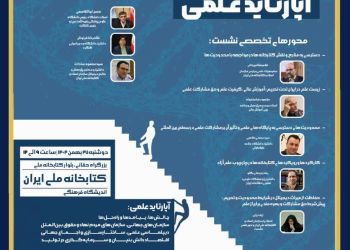
16 February 2026
Read more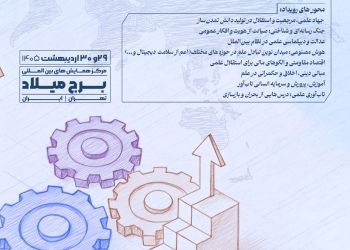
10 February 2026
Read more
01 January 2026
Read more
01 January 2026
Read more
28 December 2025
Read more
27 December 2025
Read more
07 November 2025
Read more
Comments