
Official Announcement Regarding the Postponement of the Congress
17 May 2026
Read more
the scientific meeting titled “Scientific Apartheid” commenced at the Islamic Azad University of Sari with the participation of a number of prominent national scientific and academic figures.
The meeting was held with the aim of introducing the impacts and consequences of discrimination in access to global scientific achievements. Participants discussed and exchanged views on ways to achieve the free flow of science under conditions of restrictions and scientific sanctions.
The five main themes of this one-day conference include: the exchange and dissemination of knowledge from the perspective of the Islamic world and monotheistic religions; methods to confront scientific apartheid; the criminalization of its manifestations; the role of international relations and scientific diplomacy in countering this phenomenon; and an examination of the challenges and consequences of scientific apartheid.
At the opening ceremony, Abdolreza Babaei, President of Islamic Azad University of Mazandaran, described scientific diplomacy as a smart and confrontational strategy, stating that this approach can enable the exchange of knowledge even under conditions of scientific apartheid.
Sardar Mohad, Commander of the Karbala Corps of Mazandaran, also emphasized that scientific independence is a prerequisite for the sustainability of cultural independence, noting that science can become an active tool for balancing power even under conditions of maximum restriction.
Gholamreza Farnoush, the scientific secretary of the meeting, referred to instances of scientific apartheid and described the assassination of scientists as its most severe example. He added that the assassination of Dr. Tehranchi during the 12-day imposed war is a clear example of sanctions, discrimination, and assassination within the framework of scientific apartheid.
Emphasizing the necessity of national and international consensus-building to confront scientific apartheid, he stated that institution-building, movement-building, discourse creation, and the formation of scientific unions at national and international levels are among the key objectives of holding this meeting. He added that achieving scientific authority and reference status also requires the removal of internal and external restrictions.
During the conference, a number of professors and prominent scientific figures from Mazandaran discussed the consequences of scientific apartheid and exchanged views on strategies to overcome it.
It is worth noting that this meeting is the fifth “Scientific Apartheid” conference held in the country, organized at the initiative of Baqiyatallah University.
The International Congress on Scientific Apartheid will be held in Tehran on the 29th and 30th.
17 May 2026
Read more
19 February 2026
Read more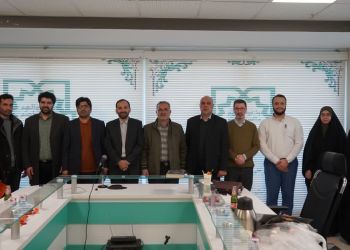
16 February 2026
Read more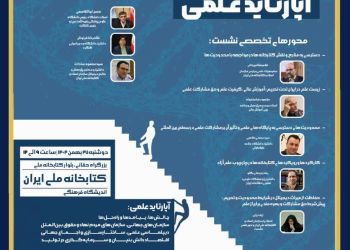
16 February 2026
Read more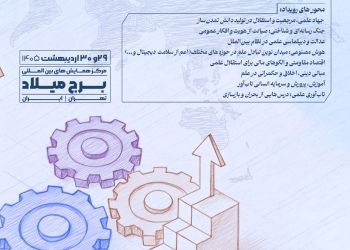
10 February 2026
Read more
01 January 2026
Read more
01 January 2026
Read more
28 December 2025
Read more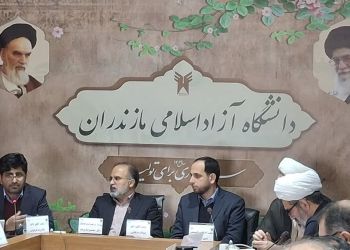
27 December 2025
Read more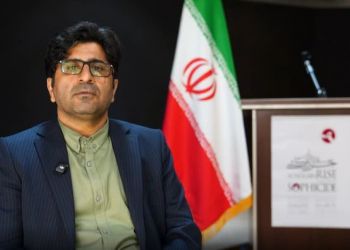
07 November 2025
Read more
Comments